

Bitdash Graphics provides specialized building automation graphics engineered exclusively for the Niagara Framework®.
Founded in 2017, Bitdash Graphics was established to address a consistent issue observed in Niagara deployments: while control logic and system architecture were robust, graphic layers often introduced inefficiency — excessive navigation depth, inconsistent standards, and slow operator response.
Our work is built around a single operational rule:
Two clicks. Ten seconds.
Any critical system state should be reachable within two clicks and understood within ten seconds.
This principle governs every graphic layout, navigation structure, and data presentation we design.
Our mission is to optimize the human–machine interface layer of Niagara systems by delivering graphics that improve situational awareness, reduce mean time to diagnose (MTTD), and support faster corrective action.
We design for:
Operators, not presentations
Live system conditions, not screenshots
Scalability across sites, not one-off views
We work exclusively within the Niagara ecosystem, ensuring deep platform fluency and long-term maintainability.
Core capabilities include:
Niagara PX and HTML5 (N4+) graphics
Equipment-level visualization (AHUs, RTUs, Boilers, Chillers, VAVs, Pumps)
System-level graphics (Hydronic loops, air systems, energy flows)
Campus and floor plan integration
Reusable graphic templates and symbol libraries
Standardized naming, tagging, and slot referencing
Alarm-prioritized layouts and status-driven color logic
Performance-optimized graphics to minimize station load and client latency
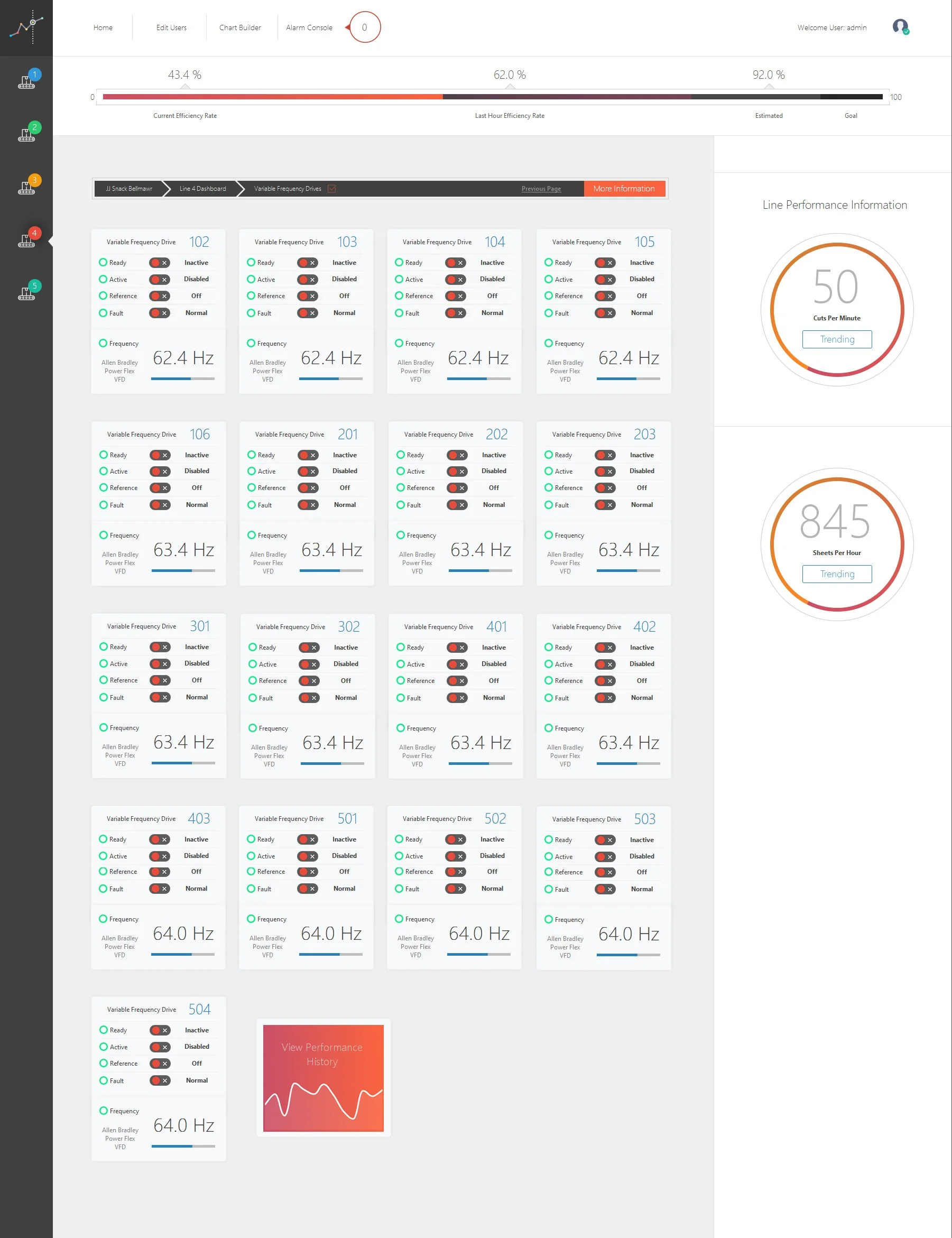
Bitdash Graphics delivers Niagara graphics that function as part of the control system, not as an afterthought layered on top of it
//
Bitdash Graphics delivers Niagara graphics that function as part of the control system, not as an afterthought layered on top of it //

Stephen Hoffman
FOUNDER / CEO

Sam Kensinger
MANAGING PARTNER
All graphics are designed to align with Niagara’s object model, slot architecture, and ord hierarchy to ensure compatibility and ease of integration.
Our graphic development process emphasizes clarity, consistency, and performance:
Logical data grouping based on control intent
Clear differentiation between command, status, and alarm states
Minimal dependency chains to avoid unnecessary refresh overhead
Consistent color logic tied to operating states
Scalable designs that support cloning and mass deployment
We avoid decorative elements that do not convey system state or operational value.
We understand Niagara from an integrator and operator perspective, not just a visual one.
Our graphics are built to:
Reduce operator training time
Improve troubleshooting efficiency
Support standardized deployments across portfolios
Remain serviceable through future system expansions